
Best Accounting Softwares in Dubai

Best Accounting Softwares in Dubai

 Introduction

As Dubai continues to thrive as a global business hub, companies in the UAE are seeking effective accounting software solutions to manage their finances with accuracy, efficiency, and compliance. Whether you are a small business or a large enterprise, choosing the right accounting software is crucial for maintaining financial health and staying compliant with local tax regulations, including VAT.

In this blog, we explore some of the best accounting softwares in Dubai, offering features to simplify bookkeeping, tax filing, payroll management, and more.

1 Diadyn Finance & Accounting Solution

Overview: Diadyn Finance & Accounting solution is a robust platform that combines automation, real-time insights, and compliance with Dubai’s financial regulations. It is particularly suitable for businesses looking for a tailor-made solution.

Key Features:

  • Real-time financial data tracking and reporting.
  • Multi-Currency and Global Compliance
  • Advanced security features to protect sensitive financial data.
  • Integration with other business applications such as CRM and ERP.
  • User-Friendly Interface
best accounting softwares in dubai diadyn finance and accounting solution

2. QuickBooks Online

Overview: QuickBooks Online is a globally recognized accounting software that offers powerful features tailored to the needs of Dubai’s businesses. It’s cloud-based, making it accessible from anywhere and scalable as your business grows.

Key Features:

  • Seamless VAT filing and compliance with Dubai tax laws.
  • Payroll management and integration with banking systems.
  • Detailed financial reporting and customizable dashboards.
  • Mobile app support for on-the-go access to your financial data.
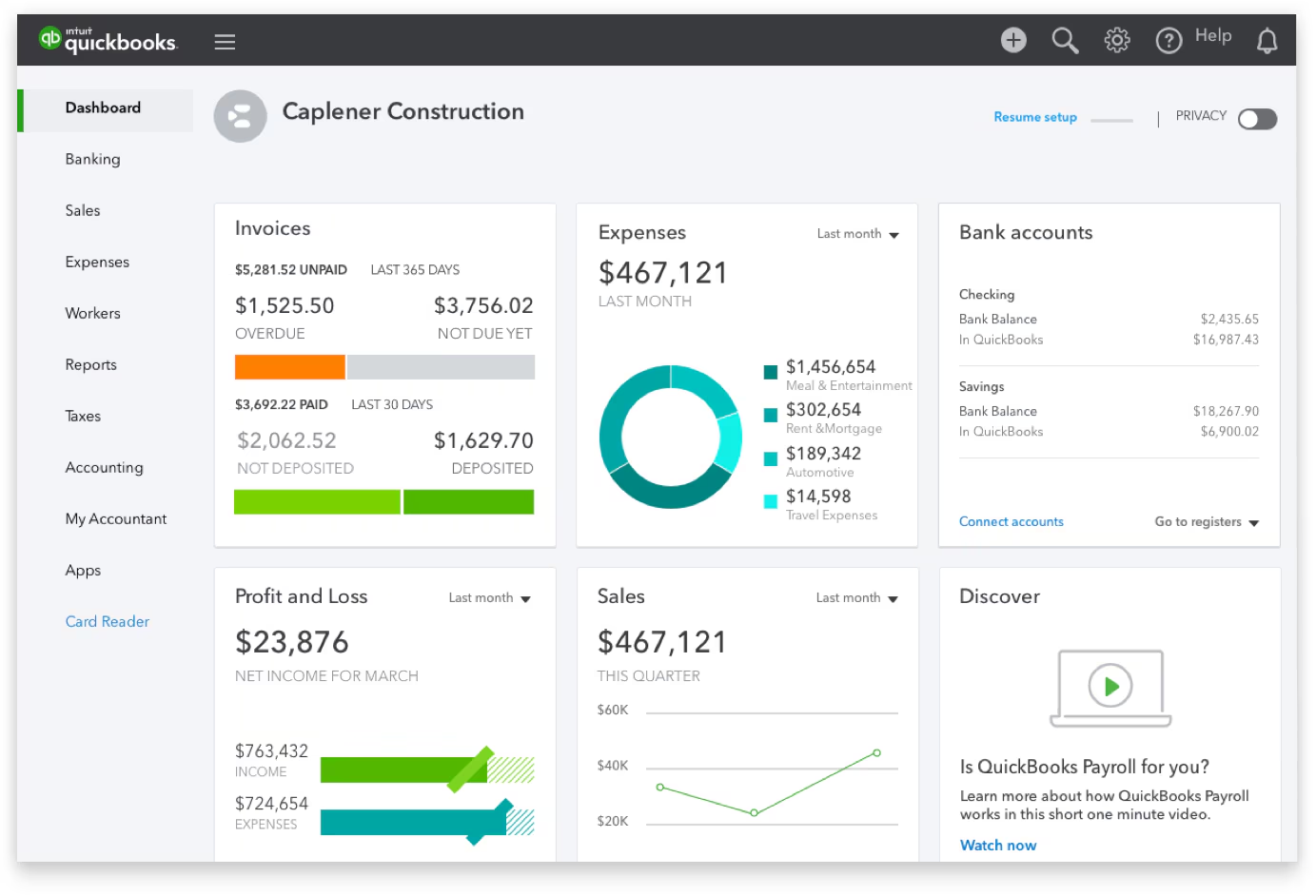
A dashboard displaying an overview of various metrics and data visualizations in a comprehensive layout.

3. Tally ERP

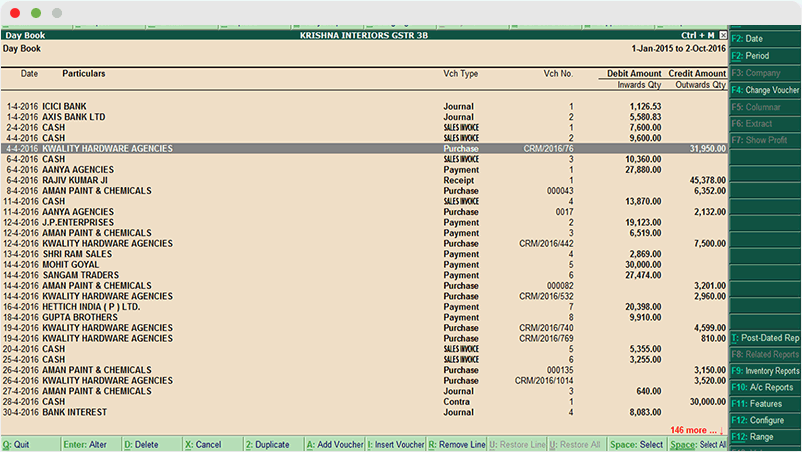
Overview: Tally ERP  is a trusted accounting software in Dubai and across the UAE, particularly favored by small and medium-sized enterprises (SMEs). It offers robust features for managing financial accounting, inventory, payroll, and VAT compliance.

Key Features:

  • UAE VAT compliance with automatic calculation and filing.
  • Extensive support for inventory and stock management.
  • Payroll processing and employee management tools.
  • Multi-lingual support, including Arabic.
4 Odoo

Overview: Odoo is an open-source ERP solution with a dedicated accounting module, making it a strong contender for businesses in Dubai. Its flexibility and modular approach allow businesses to customize the software to meet their specific accounting needs.

Key Features:

  • Full VAT compliance for UAE businesses.
  • Integrated modules for invoicing, expense tracking, and payroll.
  • Multi-currency and multi-language support.
  • Customizable reports and automation for financial workflows.
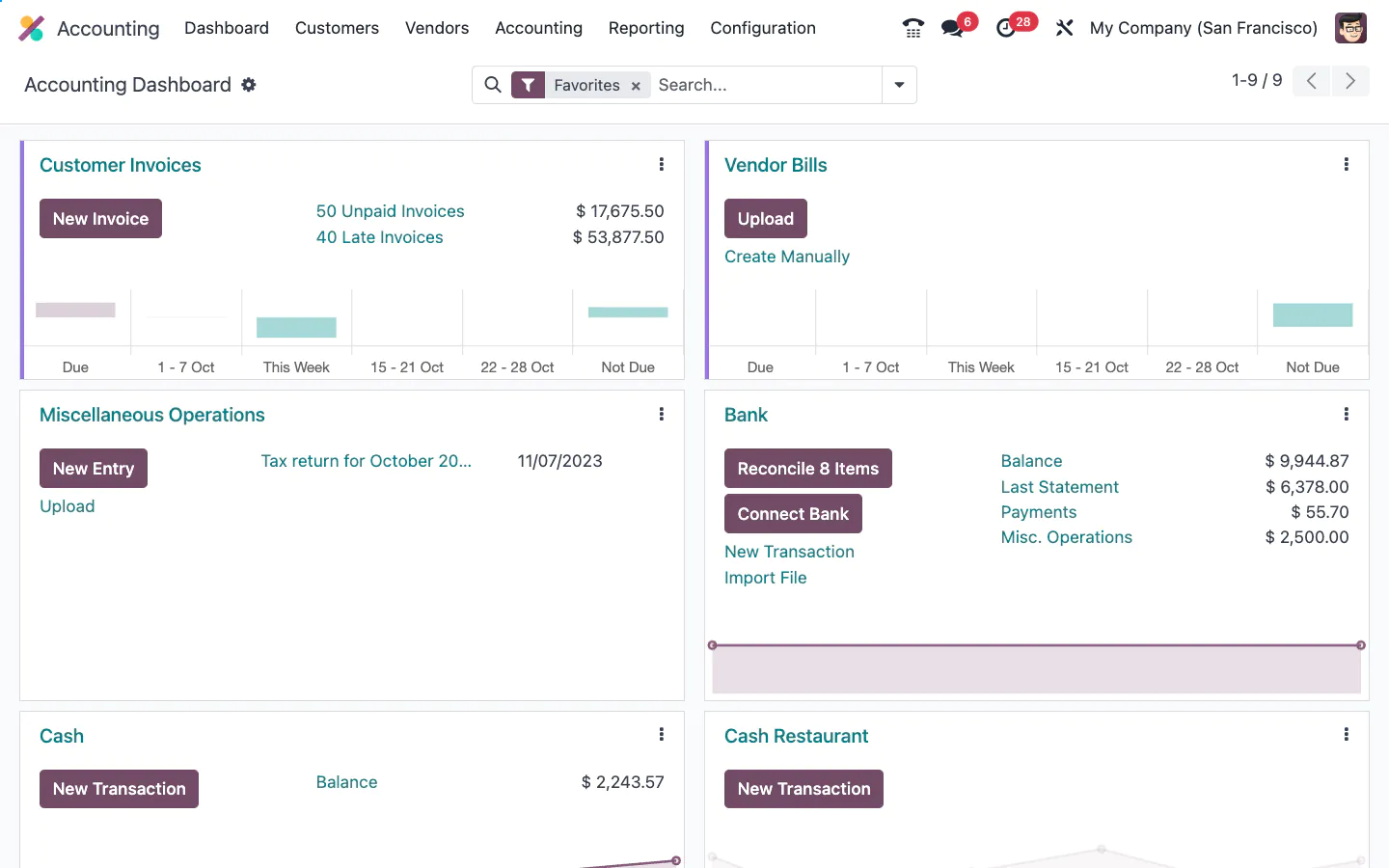
A dashboard displaying an overview of various metrics and data visualizations in a comprehensive layout.

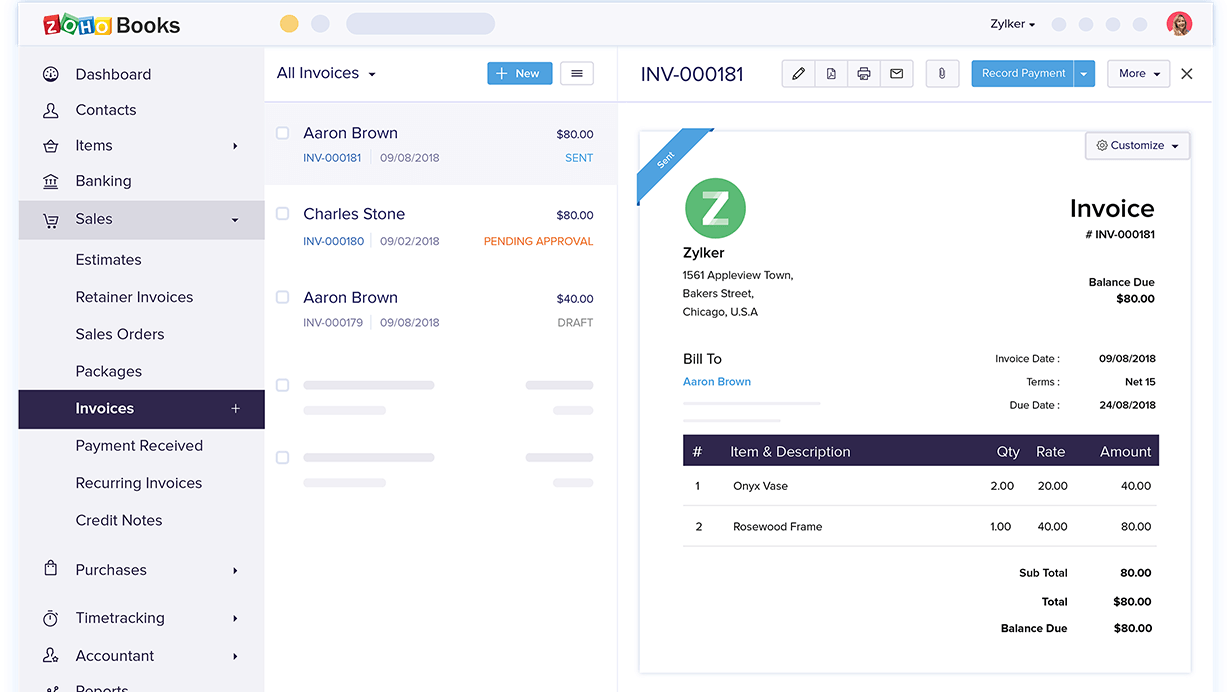
5  Zoho Books

Overview: Zoho Books is a popular choice among businesses in Dubai, especially SMEs, for its user-friendly interface and wide range of accounting features. It offers a comprehensive solution for invoicing, expense management, project tracking, and tax filing.

Key Features:

  • VAT compliance and automated tax filing for UAE businesses.
  • Multi-currency support, making it ideal for international transactions.
  • Real-time collaboration with clients and accountants.
  • Automated payment reminders and recurring invoices.
6. Sage 50 Cloud (Formerly Peachtree)

Overview: Sage 50 Cloud is an established accounting software that is well-known among Dubai-based businesses for its feature-rich platform. It combines desktop functionality with cloud accessibility for modern-day accounting.

Key Features:

  • Comprehensive VAT accounting and compliance.
  • Inventory management and supply chain features.
  • Secure cloud backups and remote access to financial data.
  • Customizable financial reports and dashboards.
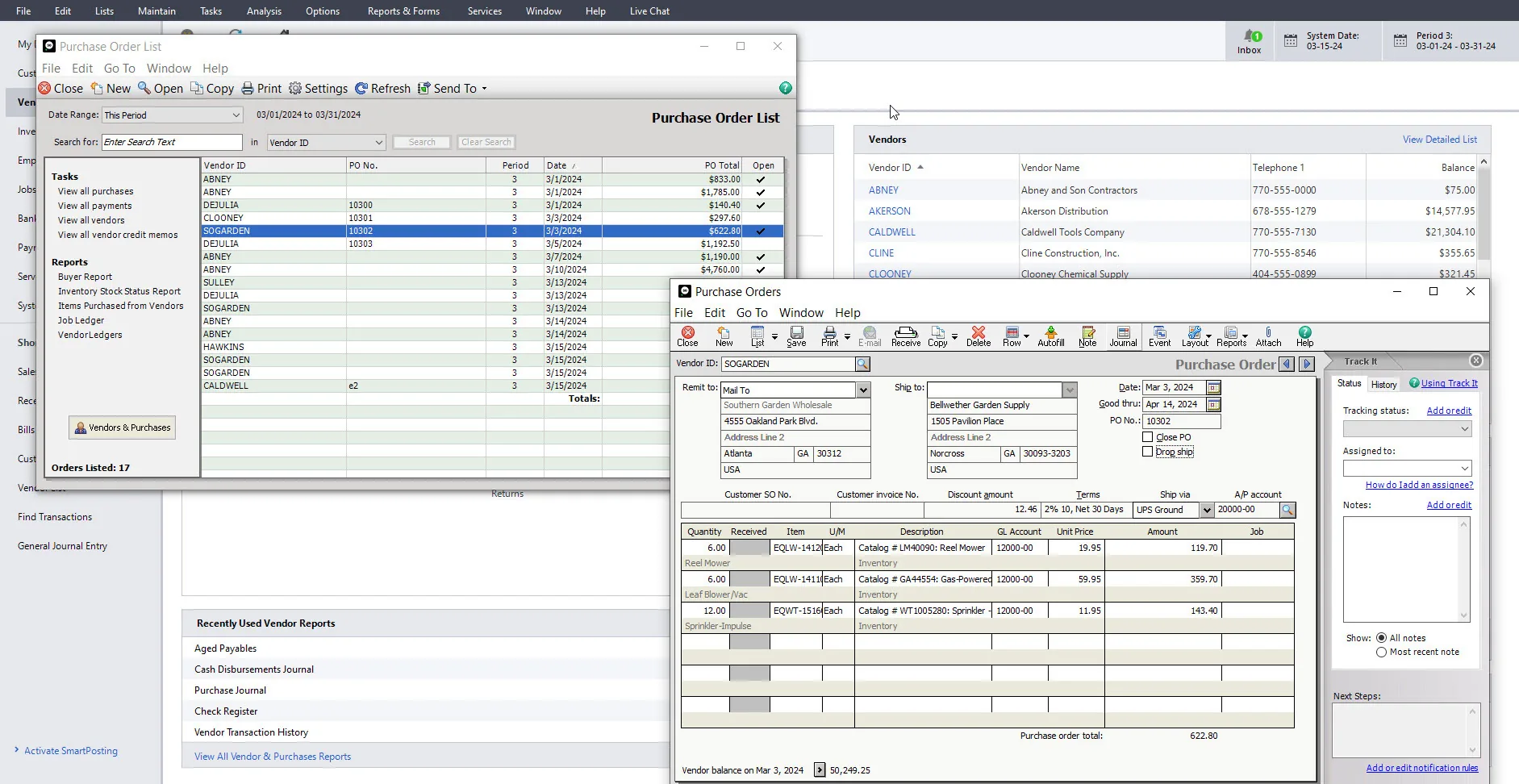
Screenshot of accounting software interface displaying financial data and tools for managing accounts efficiently.

7.Xero

Overview: Xero is a cloud-based accounting solution that has gained popularity in Dubai for its simplicity and focus on automation. It’s ideal for small businesses that need to manage finances and bookkeeping without the complexity of more enterprise-level systems.

Key Features:

  • Automated bank feeds, invoices, and reconciliation.
  • Real-time financial reporting and insights.
  • Payroll and VAT compliance tailored for UAE businesses.
  • Extensive third-party app integrations for additional functionality.
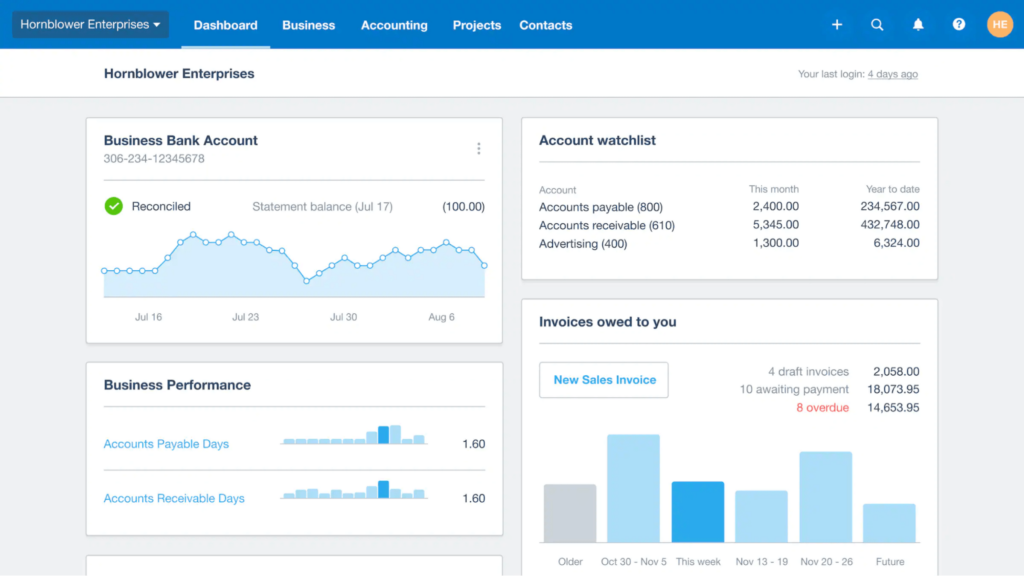
A complex dashboard displaying multiple layers of data visualizations and metrics for analysis and monitoring.

Conclusion

Selecting the right accounting software is crucial for staying organized and compliant in Dubai’s fast-paced business environment. Whether you need a simple solution like Zoho Books or a comprehensive platform like Diadyn, the right software can streamline your accounting processes, improve financial visibility, and ensure compliance with UAE tax laws.

Diadyn Finance & Accounting Solution  is ideal for businesses that need a highly secure, scalable, and UAE-specific accounting solution that offers end-to-end financial management.
CRM Best Practices for Small and Medium-Sized Businesses

CRM Best Practices for Small and Medium-Sized Businesses

1. Introduction

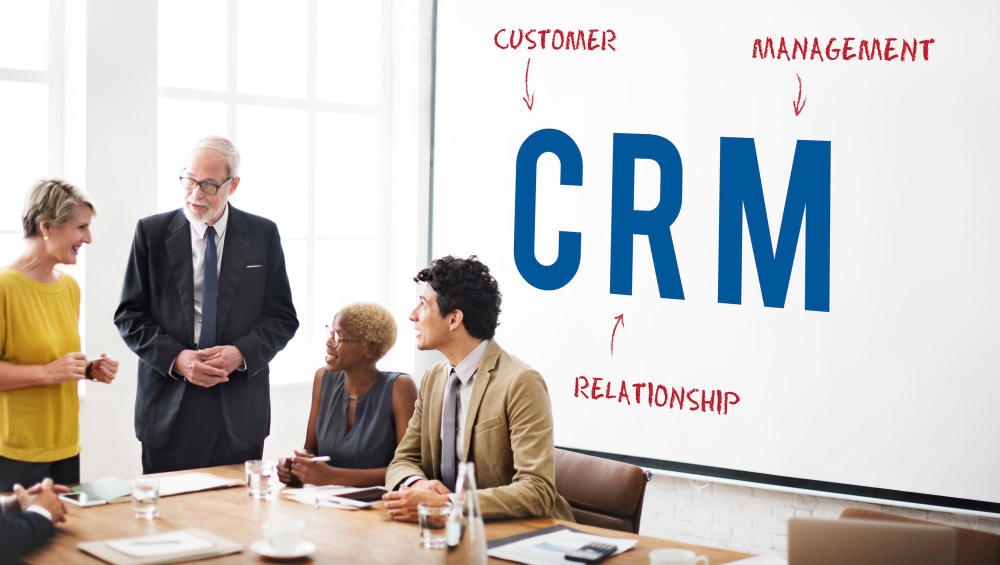
Best practices are crucial for small and medium-sized businesses (SMBs) to stay competitive in today’s ever-changing business landscape. One of the most effective tools available is Customer Relationship Management (CRM) software. When used properly, a CRM system can streamline your operations, improve customer interactions, and foster business growth.. When executed well, a CRM system can help SMBs optimise operations and interactions with customers to push growth. But to take advantage of all this, there are a few CRM best practices you need to follow. This is a how-to of the best practices for SMBs to capitalize with their CRM systems.

1.1 Invest in Your CRM Wisely

First and foremost, choosing the right CRM system that fits your needs within a business is probably of paramount importance. Consider your business size, industry and specific needs. The ideal CRM for SMBs is one that offers scalability, integration with other common tools and easy-to-understand. This means not necessarily going with a more complicated setup that would be hard to integrate into the workflow. 

1.2 Have Clear Goals and Set Objectives

Explain what you hope to achieve with this new system. Track everything from customer service assessments to improved sales processes as you go. Keep this evaluation in the long-term to assess progress on the hard targets you have identified. 

1.3 Enable Training and Onboarding, Keeps Going the Glowing

The best way to ensure that your CRM implementation is successful is by training. They typically fail when there's a lack of proper training. Make sure your crew is being trained effectively in how to use the CRM system. Provide ongoing measures to assist. Keep making available help to teach employees how to comfortably use the software and consider having a CRM champion to help everyone else in their use of the application. 

1.4 Customize Your CRM to Fit Your Business Processes

Every business has its own unique characteristics, and your CRM should mirror that. Utilize customization options to adapt the CRM to your specific workflows. Tailor fields, processes, and dashboards to match how your business functions. This approach will make the CRM more user-friendly for your team and enhance adoption rates. 

1.5 Integrate CRM with Other Business Tools

A CRM system reaches its full potential when it collaborates with other business tools. Connect your CRM with marketing automation platforms, email systems, accounting software, and other vital tools. This integration guarantees that data flows smoothly throughout your organization, minimizing manual data entry and boosting efficiency. 

1.6 Maintain Data Quality

The success of your CRM is closely linked to the quality of the data it holds. Set up processes for regular data cleaning to eliminate duplicates, fix errors, and refresh outdated information. Encourage your team to input data consistently and accurately and consider employing automation tools to help uphold data integrity. 

1.7 Focus on the Customer Experience

Ultimately, a CRM system serves to enhance the customer experience. Leverage it to gain insights into customer behavior, preferences, and interactions. Personalize communications, anticipate customer needs, and proactively resolve issues. An effectively utilized CRM can transform customers into loyal advocates for your business. 

1.8 Leverage CRM Analytics for Decision-Making

One of the key benefits of CRM systems is the extensive data they offer. Use CRM analytics to monitor key performance indicators (KPIs) such as customer acquisition cost, customer lifetime value, and sales cycle duration. Analyze this information to make informed decisions, spot trends, and refine your business strategies. 

1.9 Automate Routine Tasks

CRM systems typically include automation features that can help save time and minimize errors. You can automate routine tasks like sending follow-up emails, assigning leads to sales representatives, and scheduling appointments. This not only boosts efficiency but also enables your team to concentrate on more valuable activities. 

1.10 Monitor and Refine Your CRM Strategy

 The business landscape is always changing, and your CRM strategy should adapt accordingly. Regularly assess the performance of your CRM system and collect feedback from users. Be ready to adjust processes, workflows, and configurations to ensure that your CRM continues to align with your business needs. 

2. Conclusion

 Adopting CRM best practices is essential for unlocking the full potential of your CRM system. For small and medium-sized businesses, a well-implemented CRM strategy can enhance customer relationships, streamline operations, and drive growth. By selecting the right CRM, establishing clear objectives, providing adequate training, and prioritizing data quality and customer experience, your business can fully leverage its CRM investment. 

Diadyn CRM is tailored for small and medium-sized businesses, helping you enhance customer relationships, improve operations, and foster growth. This powerful yet user-friendly platform integrates smoothly with your current tools, offers detailed analytics, and automates everyday tasks allowing you to concentrate on what truly counts: expanding your business.

The Benefits of Cloud-Based Billing Software for Small Businesses

The Benefits of Cloud-Based Billing Software for Small Businesses

billing software

Introduction

In today’s fast-paced, digital-driven economy, small businesses need tools that are not just affordable, but also efficient, scalable, and easy to use. One such tool that's transforming the way small businesses manage finances is cloud-based billing software.

Whether you run a boutique agency, a retail outlet, or a consulting service, switching to the cloud can dramatically improve how you handle invoicing, payments, and financial tracking. Here’s a deep dive into why cloud-based billing software is a game-changer for small businesses.

What Is Cloud-Based Billing Software?

Cloud-based billing software is a web-based application that allows businesses to manage their billing, invoicing, and payment processes through the internet. Unlike traditional desktop software, it doesn’t require installation, manual updates, or on-site data storage. All you need is a device with internet access.

Key Benefits for Small Businesses

1. Anywhere, Anytime Access

With cloud-based billing software, you are no longer tied to the office. You can generate invoices, track payments, or manage clients from any location even from your smartphone. This is especially valuable for small business owners who wear multiple hats and are always on the move.

2. Improved Cash Flow Management

By automating billing and payment reminders, cloud software helps reduce late payments and billing errors. Real-time updates allow you to monitor incoming payments and pending invoices, giving you a clear picture of your cash flow at all times.

3. Cost-Effective & Scalable

Traditional accounting systems often involve upfront costs, maintenance fees, and IT support. Cloud-based solutions typically operate on a subscription model meaning you only pay for what you use, and you can scale as your business grows.

4. Automatic Updates and Data Backup

Forget about manual software upgrades. Cloud-based tools update automatically, ensuring you always have access to the latest features and security patches. Plus, your data is backed up regularly, protecting you from unexpected data loss.

5. Enhanced Security

Reputable cloud software providers use bank-level encryption, secure servers, and multi-factor authentication to keep your financial data safe. In many cases, this level of security surpasses what small businesses could afford to implement on their own.

6. Better Collaboration

Need your accountant or team members to access the system? Cloud-based billing software allows multiple users to log in securely and collaborate in real time, streamlining communication and improving accuracy.

7. Faster Invoicing and Payments

Many cloud billing platforms integrate with online payment gateways, allowing customers to pay invoices instantly via credit card, bank transfer, or digital wallets. This not only improves the customer experience but also accelerates your cash inflows.

Final Thoughts

Cloud-based billing software is no longer just a convenience it’s a necessity for small businesses that want to stay competitive, efficient, and agile. From improved cash flow to enhanced data security and scalability, the benefits are hard to ignore.

Ready to transform your business? Explore the benefits of Diadyn cloud billing software today and see how it can revolutionize your billing process.

The Future of Billing Software : Trends to Watch

The Future of Billing Software : Trends to Watch

billing

In an era of digital transformation, billing software is evolving rapidly, becoming a cornerstone for businesses seeking efficiency, accuracy, and customer satisfaction. For small and medium-sized businesses (SMBs) especially in accounting, retail, healthcare, and technology staying ahead of billing software trends is essential to drive growth and remain competitive. At Diadyn Technology, we’re at the forefront of these changes, and in 2025, we’re unveiling the top trends shaping the future of billing software. Dive in to discover how these innovations can transform your billing processes and propel your business forward.

Top 7 Trends Shaping the Future of Billing Software in 2025


1. Cloud-Based Billing Dominance

Cloud-based billing software continues to lead the market, offering scalability, accessibility, and cost-effectiveness. In 2025, businesses are moving toward cloud solutions that provide real-time data access, automatic updates, and seamless integrations with other tools. This trend is particularly valuable for SMBs, enabling Diadyn Technology’s clients to manage billing from anywhere, whether in retail stores, healthcare clinics, or accounting offices.

Trend Insight: The cloud billing market is expected to grow from USD 3.0 billion in 2020 to USD 6.5 billion by 2025, at a CAGR of 16.6%, driven by lower operational and capital expenses, as noted in industry analyses.

2. AI and Machine Learning Integration

Artificial Intelligence (AI) and Machine Learning (ML) are revolutionizing billing software, automating complex processes and predicting customer behaviors. In 2025, AI-driven billing tools can analyze usage patterns, optimize pricing, and detect errors, improving accuracy and customer satisfaction.

Trend Insight: AI algorithms are expected to predict customer churn with up to 90% accuracy, helping SMBs retain clients proactively, a key focus for subscription-based businesses in 2025.

3. Automation for Efficiency

Billing automation is becoming standard, handling tasks like invoice generation, payment reminders, and reconciliation with minimal human intervention. In 2025, advanced automation reduces errors, speeds up processes, and frees up resources for strategic tasks. For healthcare providers, this means faster claims processing; for manufacturing, it ensures timely supplier payments.

Trend Insight: Automation tools in billing software are enabling businesses to set up custom systems that operate for years without manual input, as highlighted in recent tech analyses.

4. Mobile-Based Billing Solutions

Mobile billing apps are gaining traction, allowing businesses and customers to manage invoices on the go. In 2025, SMBs in hospitality, retail, and education can use mobile apps for real-time billing, payment collection, and customer support, enhancing flexibility and customer engagement.

Trend Insight: The mobile-based billing segment is expected to grow at a faster rate than web-based solutions, driven by the rising demand for on-the-go management, as per market forecasts.

5. Enhanced Security and Compliance

With cyber risks on the rise, billing software in 2025 incorporates advanced security features like blockchain, data encryption, and multi-factor authentication. For industries like healthcare and financial services, compliance with regulations (e.g., GDPR, HIPAA) is critical, and secure billing solutions ensure data protection and trust.

Trend Insight: Security is a top priority, with billing software adopting blockchain for transparency and encryption to safeguard sensitive financial data, as noted in recent industry reports.

6. Usage-Based and Subscription Billing Models

Billing software is adapting to flexible models like usage-based and subscription billing, catering to diverse customer needs. In 2025, retail, IT, and telecom businesses can offer tiered pricing, metered usage, or hybrid plans, improving cash flow predictability and customer satisfaction. Diadyn Technology’s clients benefit from integrating these models with accounting systems for seamless management.

Trend Insight: The usage-based billing software market is seeing innovation in intuitive interfaces and automated data reconciliation, driving growth at a CAGR of 11.25% from 2024 to 2032, according to market analyses.

Common Challenges and How to Overcome Them

  • Adoption Resistance: Train teams on new billing tools—Diadyn Technology offers customized support for SMBs.
  • Data Security Concerns: Choose vendors with robust security features, leveraging Diadyn’s expertise.
  • Integration Complexity: Partner with Diadyn for seamless integrations, minimizing disruptions across industries

How Diadyn Technology Prepares You for the Future

At Diadyn Technology, we empower SMBs across retail, healthcare, manufacturing, hospitality, education, and accounting to harness the future of billing software. From cloud-based solutions to AI-driven automation, our experts ensure you adopt cutting-edge tools for growth. Contact us today to explore tailored billing solutions for your industry.

Ready to transform your billing? Contact Diadyn Technology or dive into our billing software services for more insights.

Empower Your Business with Diadyn’s Advanced Server Solutions

Empower Your Business with Diadyn’s Advanced Server Solutions

server solution

In today’s always-connected digital economy, your business infrastructure must be fast, secure, and scalable. Whether you are running high-traffic applications, managing sensitive data, or powering an e-commerce platform, the server you rely on can make or break your performance. That’s where Diadyn’s Advanced Server Solutions come into play.

At Diadyn, we go beyond basic hosting. We deliver enterprise-grade, customizable server solutions that are engineered for reliability, security, and growth. Let’s explore how the right server setup can help you unlock new levels of performance and efficiency.

Why Server Infrastructure Matters More Than Ever

Businesses today demand speed, security, and 24/7 availability. Traditional shared hosting or outdated infrastructure just can’t keep up. Here’s what modern businesses need:

  • High uptime & availability

  • Faster application response times

  • Robust cybersecurity protections

  • Scalability to match demand surges

  • Compliance with data privacy standards

Whether you are an SME, startup, or growing enterprise, investing in a smart server solution is a crucial step toward long-term stability and success.

What Makes Diadyn’s Server Solutions Stand Out?

1. Tailored Infrastructure for Your Business

We don’t believe in one-size-fits-all. Our server experts assess your unique needs whether it’s high-speed website hosting, ERP deployment, or multi-location data sync and design the infrastructure that fits.

2. Enterprise-Grade Performance

Our advanced server configurations are built for speed and reliability, using the latest Intel/AMD processors, NVMe storage, and scalable RAM to ensure consistent performance.

3. Unmatched Security Protocols

Security is non-negotiable. We deploy layered protection, including:

  • Advanced firewalls

  • DDoS mitigation

  • Regular backups

  • SSL, VPN & access control systems

  • 24/7 server monitoring

4. Cloud & Hybrid Flexibility

Need the elasticity of cloud computing with the power of a dedicated server? We offer hybrid environments that merge private cloud and physical infrastructure for performance, control, and cost-efficiency.

5. Dedicated Support & SLA Guarantee

Our commitment doesn’t end at setup. Diadyn offers proactive support, routine maintenance, and uptime SLAs that give you peace of mind because your server shouldn’t be your stress.

Who Can Benefit from Diadyn’s Server Solutions?

Our server infrastructure is ideal for:

  • E-commerce businesses needing 99.9% uptime

  • Financial firms requiring encrypted data environments

  • Enterprises with in-house or remote teams

  • SaaS providers with dynamic scaling needs

  • Any business that prioritizes speed, security & growth

Final Thoughts

In today’s hyper-connected world, a reliable and high-performing server infrastructure is no longer optional it’s essential. Whether you're managing complex applications, handling customer data, or scaling an online business, the right server environment ensures everything runs smoothly, securely, and efficiently.

Diadyn’s Advanced Server Solutions offer more than just hosting we provide a strategic backbone for your digital operations. With scalable configurations, enterprise-grade security, and expert support, we help businesses like yours stay resilient, responsive, and ready for growth